Music Definition Of Texture : Quiz Worksheet Polyphonic Texture In Music Study Com / Texture in art stimulates the senses of sight and touch and refers to the tactile quality of the surface of the art.. In music, texture is how the melodic, rhythmic, and harmonic materials are combined in a composition, thus determining the overall quality of the sound in a piece. In other words, texture in music is the relationship between the layers of sound or lines or voices. You might describe the texture of a song or piece in terms of range, dynamics, articulation, or rhythmic complexity. Texture can be simple or elaborate, and is described with the following terms: When you describe the texture of a piece of music, you are describing the relationship of melodic and (sometimes) harmonic elements with each other.
It is based on the perceived texture of the canvas or surface. Music theory fundamentals 60 section 5.1 texture in music harmonic analysis is the analysis of chords in musical context. Texture in music refers to the number of musical lines and their density in a piece of music. In other words, texture in music is the relationship between the layers of sound or lines or voices. In music, texture is how the tempo, melodic, and harmonic materials are combined in a composition, thus determining the overall quality of the sound in a piece.
Musical Texture Learn About Different Music Textures from www.musictheoryacademy.com Musical texture is the overall sound of a piece of music or song. Understanding texture makes harmonic analysis much easier. One strand of spaghetti by itself is a single melody, as in a monophonic. This term refers to the overall characteristic of the piece, including its richness, the use of harmony. For example, a thick texture contains many layers of instruments. What are the types of textures? Texture is one of the basic elements of music. What is an example of texture in music?
When describing music, we often talk about the texture of the composition.
One strand of spaghetti by itself is a single melody, as in a monophonic. In music, texture is how the melodic, rhythmic, and harmonic materials are combined in a composition, thus determining the overall quality of the sound in a piece. Texture in music refers to the number of musical lines and their density in a piece of music. Texture in art stimulates the senses of sight and touch and refers to the tactile quality of the surface of the art. Just as physical materials have texture, so does music—though, of course, texture in music is characterized by sound, not feel. In music, texture refers to the interaction of melodies and harmonies within a song. This term refers to the overall characteristic of the piece, including its richness, the use of harmony. In music, texture is how the tempo, melodic, and harmonic materials are combined in a composition, thus determining the overall quality of the sound in a piece. Musical texture is the overall sound of a piece of music or song. When describing music, we often talk about the texture of the composition. What is an example of texture in music? What are the types of textures? We also use the word texture in a similar manner when describing the particular combination of tempo, melody, and harmony in a piece of music.
Texture describes the complexity of a musical composition. It describes music where several parts or voices are combined together contrapuntally or in counterpoint. In music, texture is how the melodic, rhythmic, and harmonic materials are combined in a composition, thus determining the overall quality of the sound in a piece. What are the types of textures? A piece may be described as having a thick texture, or a light texture, or other terms taken from outside of music (aaron copland's more popular pieces are described as having an open texture).the perceived texture of a piece can be affected by the number of parts playing.
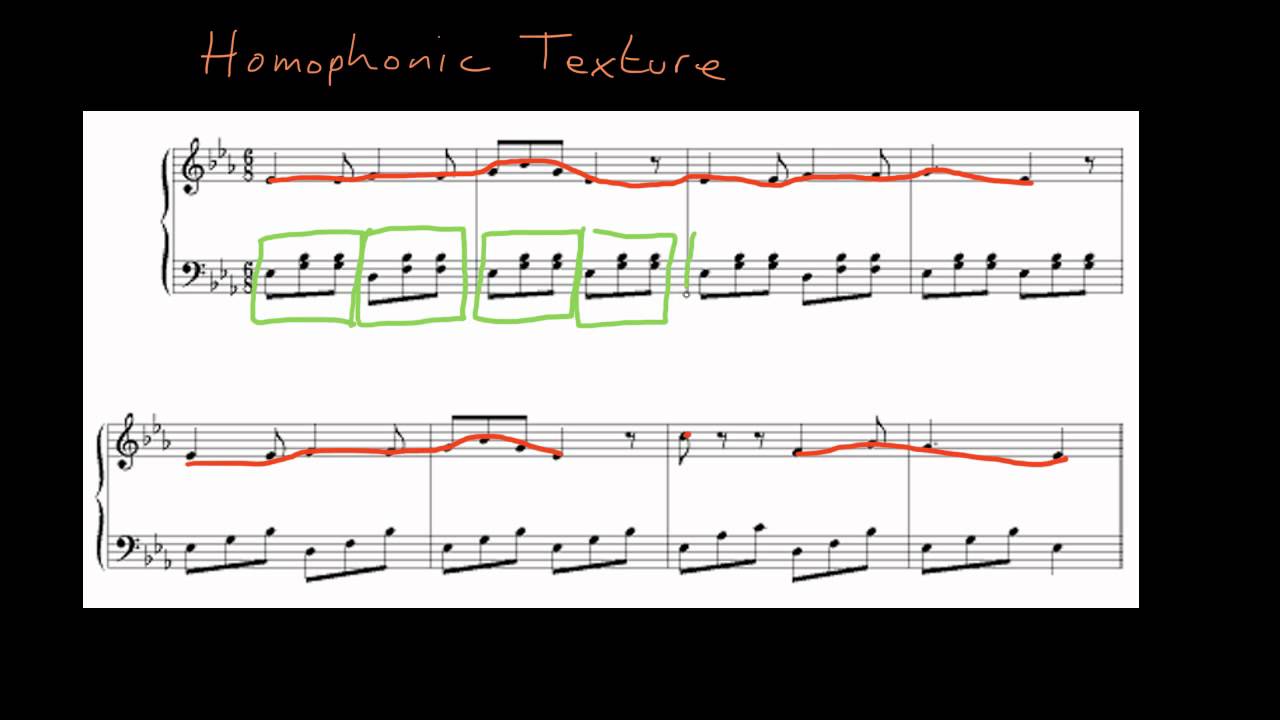
Homophonic Texture Example Youtube from i.ytimg.com This makes the piece more interesting to listen to. Imagine that a piece of spaghetti is a melody line. In music, texture is how the tempo, melodic, and harmonic materials are combined in a musical composition, determining the overall quality of the sound in a piece. When you start making your own music, you can take inspiration from the. A composition might be described as dense, meaning it features multiple layers of instruments, or thin, meaning it is distinguished by a single layer, whether a voice or instrumental accompaniment. Texture is one of the basic elements of music. My music theory book best put the definition of texture as the way melodic, rhythmic, and harmonic are woven together in a composition. by this definition the texture of a piece is a combination of all the pieces that make up music, but looking at them all together instead of separately. In music, texture is how the melodic, rhythmic, and harmonic materials are combined in a composition, thus determining the overall quality of the sound in a piece.
The word texture is used because adding different layers or elements to music creates a musical tapestry..
Music theory fundamentals 60 section 5.1 texture in music harmonic analysis is the analysis of chords in musical context. You might describe the texture of a song or piece in terms of range, dynamics, articulation, or rhythmic complexity. This makes the piece more interesting to listen to. One strand of spaghetti by itself is a single melody, as in a monophonic. We also use the word texture in a similar manner when describing the particular combination of tempo, melody, and harmony in a piece of music. Texture describes the complexity of a musical composition. Texture might be described as high or low, depending on the pitch;. When describing music, we often talk about the texture of the composition. Musicians mix and layer the sounds they are playing to create texture. Texture in art stimulates the senses of sight and touch and refers to the tactile quality of the surface of the art. In music, texture refers to the interaction of melodies and harmonies within a song. What is an example of texture in music? In music, texture is how the melodic, rhythmic, and harmonic materials are combined in a composition, thus determining the overall quality of the sound in a piece.
In music, texture is how the melodic, rhythmic, and harmonic materials are combined in a composition, thus determining the overall quality of the sound in a piece. The texture of a piece or song is determined by how the melodic, rhythmic, and harmonic materials are combined in a composition, thus determining the overall nature of the sound in a piece. In music, texture is how the tempo, melodic, and harmonic materials are combined in a composition, thus determining the overall quality of the sound in a piece. Texture might be described as high or low, depending on the pitch;. Musical texture is how we describe the overall quality, or sound, of a piece of music.
Monophonic In Music Definition Examples Video Lesson Transcript Study Com from study.com The word texture is used because adding different layers or elements to music creates a musical tapestry.. A piece may be described as having a thick texture, or a light texture, or other terms taken from outside of music (aaron copland's more popular pieces are described as having an open texture).the perceived texture of a piece can be affected by the number of parts playing. When you describe the texture of a piece of music, you are describing the relationship of melodic and (sometimes) harmonic elements with each other. In general, the texture of music can be thin. Texture describes how layers of sound within a piece of music interact. This makes the piece more interesting to listen to. How to use texture in a sentence. Examples of polyphony rounds, canons, and fugues are all polyphonic.
Musical texture is the overall sound of a piece of music or song.
Musical texture is the overall sound of a piece of music or song. What is an example of texture in music? In music, texture is how the melodic, rhythmic, and harmonic materials are combined in a composition, thus determining the overall quality of the sound in a piece. Texture is one of the basic elements of music. Created by alisha nypaver and ephraim schäfli. Imagine that a piece of spaghetti is a melody line. In music, texture is how the melodic, rhythmic, and harmonic materials are combined in a composition, thus determining the overall quality of the sound in a piece. In music, texture is basically a way to describe how the music or sound is organized. When you start making your own music, you can take inspiration from the. In general, the texture of music can be thin. In music, texture is how the tempo, melodic, and harmonic materials are combined in a musical composition, determining the overall quality of the sound in a piece. This makes the piece more interesting to listen to. Understanding texture makes harmonic analysis much easier.